Liquid Ring Vacuum Pump Manual: Working Principle, Parts & PDF Guide
Introduction
Liquid ring vacuum pumps remain one of the most widely used vacuum technologies across chemical processing, power generation, pharmaceutical manufacturing, food processing, and pulp and paper industries. Their enduring popularity stems from a simple yet remarkably robust design that handles wet gases, condensable vapors, and even liquid carryover better than most alternative technologies.
Working Principle: How the Liquid Ring Creates Vacuum
The operating principle of a liquid ring vacuum pump is elegant in its simplicity. The pump casing is partially filled with a sealing liquid—most commonly water, though other fluids such as ethylene glycol, mineral oils, or organic solvents may be used depending on process compatibility. An impeller mounted eccentrically (off-center) within the casing rotates, and centrifugal force throws the sealing liquid outward against the casing wall, forming a rotating liquid ring.
Because the impeller is offset from the casing center, the space between the impeller blades and the liquid ring changes volume as the impeller rotates. During the first half of each revolution, the volume increases—creating a vacuum that draws gas in through the suction port. During the second half, the volume decreases, compressing the trapped gas and discharging it through the outlet port. This cycle repeats continuously, producing a non-pulsating, steady vacuum.
The liquid ring serves three critical functions simultaneously: it seals the spaces between impeller blades to prevent backflow, absorbs the heat of compression to keep the pump cool, and acts as the compression medium itself. This isothermal compression means the pumped gas barely heats up during the process, making these pumps ideally suited for handling moisture-laden gases and condensable vapors.
Key Components: What's Inside the Pump
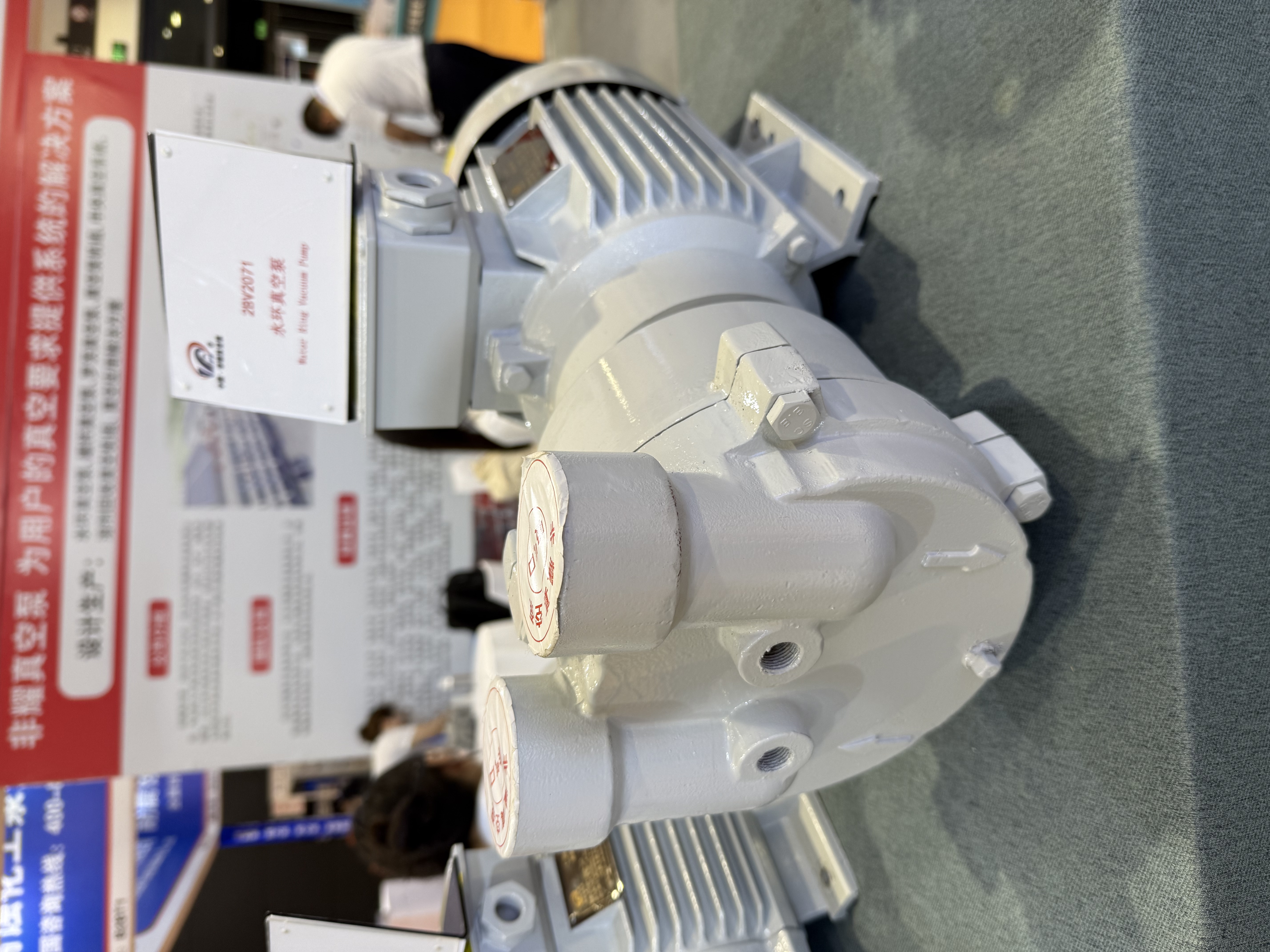
A liquid ring vacuum pump consists of relatively few moving parts, which contributes to its reputation for reliability. The primary components include:
- Casing – The outer shell that houses all internal components, provides structural support, and contains the sealing liquid.
- Impeller – The rotating component with radial blades, mounted eccentrically within the casing. The impeller is the only moving part in the pump.
- Liquid Ring – The rotating ring of sealing liquid formed against the casing wall by centrifugal force, which creates the compression chambers.
- Suction Port – The inlet through which gas or vapor enters the pump.
- Discharge Port – The outlet through which compressed gas and some sealing liquid are expelled.
- Sealing Liquid Supply – The connection that introduces fresh sealing liquid to maintain the liquid ring.
Additional accessories commonly include isolation valves, check valves, strainers, heat exchangers, and separators for recirculating the sealing liquid.
Single-Stage vs. Two-Stage Configurations
One of the most important design decisions when selecting a liquid ring vacuum pump is whether a single-stage or two-stage configuration is required.
Single-Stage Pumps
Single-stage pumps complete the compression process in one step. They are typically selected for moderate vacuum requirements where simplicity, robustness, and vapor tolerance are priorities. A single-stage liquid ring pump typically achieves vacuum levels down to approximately 30–33 mbar absolute.
Two-Stage Pumps
Two-stage pumps perform compression in two successive steps within the same unit. Gas discharged from the first stage enters a second stage where it is compressed further. This staged compression enables deeper vacuum levels—as low as 28 mbar absolute—and improved efficiency at lower pressures. Two-stage configurations are preferred for applications such as vacuum distillation, solvent recovery, and demanding chemical operations.
Sealing Liquid Selection: A Critical Consideration
While water is the most common sealing liquid, the choice of seal fluid significantly impacts pump performance and longevity. The sealing liquid must be compatible with both the process gas and the pump's materials of construction.
Key factors to consider when selecting a sealing liquid include:
- Vapor pressure – Lower vapor pressure prevents the seal fluid from flashing and causing cavitation. The achievable vacuum level is directly limited by the vapor pressure of the sealing liquid at operating temperature.
- Temperature – Typical seal liquid temperatures should be maintained between 50–75°F so the internal pump temperature rarely exceeds 100°F. Seal water temperature directly affects pump capacity.
- Compatibility – The seal liquid must not react with process gases or corrode pump components. Flammable sealing liquids must be avoided.
- Freezing protection – When using water-based sealing liquids, precautions must be taken to prevent freezing in cold environments.
Operation and Maintenance Best Practices
Proper operation and maintenance are essential for maximizing pump life and performance. Liquid ring vacuum pumps are known for low maintenance requirements, but neglect can lead to costly repairs.
Daily Checks
- Visual inspection for leaks, unusual noises, or vibrations
- Monitoring temperature and pressure readings
- Verifying seal liquid levels
Weekly Tasks
- Inspecting bearings for wear or overheating
- Reviewing system gauges
- Checking coupling inserts
Monthly Maintenance
- Lubrication of bearings (if applicable) according to manufacturer specifications—typically once per year or every 3,000 operating hours
- Inspection of seals for wear
- Cleaning of heat exchangers
Annual Comprehensive Inspection
- Thorough inspection of all components
- Replacement of worn bearings and seals
- System flushing to remove contaminants
Common Troubleshooting Issues
Even the most reliable pumps can encounter problems. Understanding common issues enables quick diagnosis and resolution:
Insufficient Vacuum
Often caused by low seal liquid, high temperature, air leaks, or incorrect pump sizing. Check seal liquid levels, inspect all piping connections for leaks, and verify the pump is correctly sized for the application.
Excessive Noise or Vibration
Frequently indicates cavitation, dirt in the system, or worn bearings. Cavitation occurs when operating too close to ultimate vacuum or when seal liquid temperature is too high. Filter the sealing liquid, maintain proper levels, and replace bearings routinely.
Overheating
May result from insufficient cooling water flow, clogged heat exchangers, or heavy gas load. Monitor cooling water flow rates and clean heat exchangers regularly.
Low Pumping Speed
Can indicate blocked pipes, poor liquid flow, or excessive backpressure. Clean pipelines, regulate flow, and use control systems to balance operating levels.
Key Advantages of Liquid Ring Technology
Liquid ring vacuum pumps offer several distinct advantages that make them the preferred choice for demanding applications:
- Excellent wet gas handling – These pumps are uniquely suited for applications involving steam, saturated gases, and condensable vapors. Internal condensation is not a problem—it is part of normal operation.
- Oil-free vacuum – The sealing medium is liquid rather than oil, eliminating the risk of oil contamination in the process gas stream.
- Simple, robust design – With relatively few moving parts and no metal-to-metal contact inside the pumping chamber, liquid ring pumps offer long service life and dependable performance.
- Quiet operation – The liquid ring naturally dampens noise and vibration, with noise levels typically not exceeding 85 dBA.
- Ability to handle contaminants – Soft solids, moisture, liquid slugs, and chemicals can pass through without damaging the pump.
- Low maintenance – Routine maintenance focuses primarily on bearings, mechanical seals, and monitoring the sealing liquid condition.
Limitations to Consider
While highly versatile, liquid ring vacuum pumps have limitations that should be understood before selection:
- Vacuum level is limited by the vapor pressure of the sealing liquid—single-stage pumps typically achieve down to 30–33 mbar absolute.
- The sealing liquid and process gas must be compatible to avoid contamination.
- Power consumption can be higher than some alternative technologies due to the energy required to maintain the liquid ring.
Conclusion
The liquid ring vacuum pump remains a cornerstone technology across diverse industries precisely because it does one thing exceptionally well: reliably handling wet, dirty, and vapor-laden gas streams where other pump technologies would fail. Its simple construction, oil-free operation, and tolerance for challenging process conditions make it an enduring choice for engineers and plant operators who prioritize reliability over ultimate vacuum depth.
Understanding the working principle, component functions, sealing liquid requirements, and maintenance best practices outlined in this guide will help you select, operate, and maintain liquid ring vacuum pumps for optimal performance and longest service life. For specific applications, always consult the manufacturer's manual and technical documentation—and consider engaging with vacuum technology specialists who can provide tailored recommendations based on your unique process conditions.
Tags
Need Help with Your Vacuum Application?
Our engineers can provide expert advice tailored to your specific requirements
Contact Us Today